

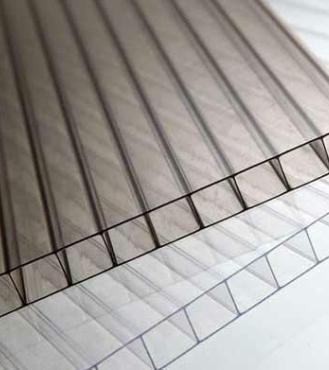
ویژگی های کالا:
توضیح اجمالی:
Polycarbonate (PC) is a high-performance, amorphous thermoplastic renowned for its exceptional impact resistance, optical clarity, dimensional stability and heat resistance. Because of this property set, PC is specified where a combination of strength and transparency is required — from protective glazing to precision optical parts, electrical housings and medical devices.
What is Polycarbonate?
Polycarbonate is a family of engineering thermoplastics produced by polymerizing bisphenol A (BPA) derivatives or via transesterification processes. The material is amorphous (no true melting point) and has a high glass transition temperature, giving it good performance at elevated service temperatures. Polycarbonate can be formulated and compounded with UV stabilizers, flame retardants, colorants and other additives to meet diverse end-use requirements.
Typical key physical parameters (typical ranges):
Main Commercial Production Routes
Both routes produce engineering-grade PC resin; downstream compounding and stabilization define the final grade.
Common PC Grades & Trade Names
Polycarbonate is supplied as homopolymer resin, blends and engineered compounds. Well-known commercial trade names include:
Other suppliers and compounders offer speciality PC grades (UV-stabilized, flame-retardant, optical, medical, high-flow) and regional brands. When specifying a grade, request MFR (melt flow rate), color/clarity, impact grade, and any regulatory approvals (food or medical).
Typical Applications
Key Performance Advantages
Limitations & Considerations
Processing Methods
Typical processing notes: dry resin thoroughly before molding (PC is hygroscopic); recommended drying and melt temperatures depend on grade — always follow supplier TDS.
Regulatory & Compliance
Recycling & Sustainability
Polycarbonate is recyclable (often coded as “7 — other”). Mechanical recycling is common for industrial scrap. Chemical recycling methods (depolymerization to BPA or other monomers) are being developed and scaled in the industry — ask suppliers about PCR (post-consumer recycled) PC grades and take-back programs if circularity is required.
Packaging, Storage & Logistics
How to Specify (buyer checklist)
When requesting quotations include:
Why Choose Us as Your Polycarbonate Supplier?
We source high-quality PC resins and compounds from reputable global producers (including grades under established trade names) and provide:
Similar products

What is Sulfur?
Sulfur is a bright yellow, non-metallic element with the chemical symbol S and atomic number 16. It is naturally abundant in volcanic deposits, natural gas, petroleum, and mineral ores. Today, most commercial sulfur is recovered as a byproduct of natural gas processing and crude oil refining through desulfurization technologies.
With global annual production exceeding 70 million metric tons, sulfur plays a vital role in modern industry. Its primary use is in the manufacturing of sulfuric acid (H₂SO₄), which is one of the most important industrial chemicals worldwide. Beyond this, sulfur is a key raw material for fertilizers, petrochemicals, pharmaceuticals, and rubber production.

Paraffin wax is a white or colorless soft solid derived from petroleum, coal, or shale oil through the process of dewaxing light lubricating oil stocks. It is composed mainly of saturated straight-chain hydrocarbons (n-alkanes) and has a typical melting point between 46°C and 68°C (115°F – 154°F). Paraffin wax is widely used in industrial, commercial, and consumer applications due to its chemical stability, water repellency, and versatility.

Base oils are the essential raw materials in the formulation of lubricants, accounting for 70% to 90% of the final product. When blended with performance additives, base oils help create lubricants that minimize friction, reduce wear, improve energy efficiency, and extend machinery life.

Liquefied Petroleum Gas (LPG)
Liquefied Petroleum Gas (LPG) is a versatile and highly efficient fuel comprised primarily of propane, butane, and isobutane, derived during the refining of crude oil or the processing of natural gas. As a pressurized liquid, LPG expands rapidly 1 liter can convert to roughly 250 liters of gas making it extremely energy-dense and efficient.

What is Jet Fuel?
Jet fuel is a specialized type of aviation fuel derived from the middle distillates of crude oil, primarily composed of hydrocarbons in the C8–C16 range. It is engineered to power gas-turbine engines in aircraft, including commercial airplanes, cargo jets, and helicopters. Unlike standard kerosene, jet fuel undergoes strict refining processes and quality controls to meet the demanding conditions of aviation, such as high altitudes, low temperatures, and extreme engine performance.

Kerosene, also referred to as paraffin oil, is a middle distillate petroleum product obtained through fractional distillation of crude oil at temperatures between 150°C and 275°C (300–525°F). It is a clear to pale yellow hydrocarbon liquid that is less volatile than gasoline but lighter than diesel, making it an essential energy carrier with diverse applications across aviation, industry, and households.
With an average energy density of 43 MJ/kg, kerosene provides efficient combustion and relatively clean performance compared to heavier petroleum fuels. Its flash point ranges between 37°C and 65°C, making it safer to store and handle than gasoline.

What is Diesel Fuel?
Diesel fuel, also known as gas oil or distillate fuel, is a petroleum product obtained through the fractional distillation of crude oil between 200°C and 350°C at atmospheric pressure. It consists mainly of hydrocarbons containing C10–C20 carbon chains, including paraffins, naphthenes, and aromatic compounds.
Diesel is widely recognized for its high energy density, efficiency in compression ignition engines, and versatility across industries. It is one of the most consumed petroleum products globally. According to the International Energy Agency (IEA), diesel accounts for approximately 28–30% of total global oil demand, making it a critical fuel for the global economy.

Fuel Oil: Definition, Properties, and Global Applications
What is Fuel Oil?
Fuel oil, also known as heavy oil or residual oil, is a petroleum fraction obtained as a by-product during the distillation of crude oil. It is a viscous, dark-colored liquid hydrocarbon that remains after lighter fractions such as gasoline, kerosene, and diesel are removed from crude oil. Chemically, fuel oil is a mixture of long-chain hydrocarbons containing carbon, hydrogen, small amounts of sulfur, nitrogen, oxygen, and trace metals. Its energy density makes it one of the most important fuels in global energy consumption.
According to the International Energy Agency (IEA), fuel oil accounts for nearly 10–12% of total world oil demand, with major consumption in shipping, power generation, and industrial heating.

Bitumen: Definition, Properties, and Main Grades
What is Bitumen?
Bitumen, often referred to as asphalt, is a highly viscous hydrocarbon material derived as a by-product of crude oil refining or found in natural deposits. Its unique combination of adhesion, waterproofing ability, and durability makes it indispensable in road construction, pavement surfacing, and industrial applications.
Globally, more than 85% of bitumen consumption is allocated to road and highway construction, while the rest is used in roofing, waterproofing membranes, and industrial products.

Plasticizers are vital chemical additives used to increase the flexibility, workability, and durability of polymer materials—most notably polyvinyl chloride (PVC). By embedding themselves between polymer chains, plasticizers reduce intermolecular forces, making materials softer, more elastic, and easier to process.
They play a crucial role across multiple industries, from construction and automotive to medical devices, packaging, and consumer goods.
Among the wide range of available plasticizers, three products dominate the global market due to their excellent balance of performance, cost-efficiency, and safety standards:
DOP (Dioctyl Phthalate), DINP (Diisononyl Phthalate), and DOTP (Dioctyl Terephthalate).

Pigments and dyes are the essential coloring agents used across various industries — from plastics, coatings, and textiles to inks, cosmetics, and automotive manufacturing. They represent a vital segment of specialty chemicals, offering not only vibrant color performance but also durability, stability, and compatibility with modern formulations.

Surfactants, or surface-active agents, are a key class of specialty chemicals that reduce surface and interfacial tension between liquids, solids, and gases. They play a vital role in enhancing wetting, dispersing, emulsifying, foaming, and cleaning properties across multiple industries — from detergents and personal care products to oilfield chemicals, textiles, agriculture, and pharmaceuticals.

Butadiene derivatives are high-value chemical families made from the light olefin 1,3-butadiene (C₄H₆). Because butadiene is the principal monomer for a range of synthetic rubbers and elastomers, its derivatives underpin major industrial applications — most importantly the tire and automotive industries, industrial goods, adhesives and specialty polymers. This page explains production, properties, commercial grades and practical procurement advice for synthetic rubbers made from butadiene: Styrene-Butadiene Rubber (SBR), Polybutadiene Rubber (BR) and Nitrile Butadiene Rubber (NBR).

Ethylene derivatives are the industrial compounds produced from ethylene (C₂H₄) that form the backbone of modern plastics, fibers, coatings and many specialty chemicals. Common derivative families include ethylene oxide → glycols (MEG, DEG, TEG), ethylene dichloride (EDC) → vinyl chloride (VCM) → PVC, and vinyl acetate monomer (VAM) for adhesives and paints. Demand for these derivatives is closely linked to global petrochemical feedstock flows (steam-cracker and PDH runs), end-use growth (packaging, textiles, construction, automotive) and regional capacity additions.

Propylene derivatives represent one of the most vital families of petrochemical intermediates derived from propylene (C₃H₆) — a key building block in the global chemical industry. Propylene is primarily obtained from steam cracking of hydrocarbons or as a byproduct of fluid catalytic cracking (FCC) in refineries. Its derivatives play a crucial role in producing a wide array of consumer goods, plastics, fibers, coatings, and industrial materials.

Cyclohexane (CAS 110-82-7) is a colorless, non-polar cycloalkane (C₆H₁₂) widely produced and traded as a petrochemical intermediate. It is principally manufactured by hydrogenation of benzene and serves as a primary feedstock to produce cyclohexanol / cyclohexanone (KA oil), which in turn are converted to adipic acid and caprolactam — the essential intermediates for nylon-6,6 and nylon-6 polymers. Because of its role in the nylon value chain, cyclohexane demand closely follows global polymer, textile and automotive markets.

Phenol (CAS 108-95-2) is one of the most important aromatic intermediates in the chemical industry. Although it appears simple chemically, phenol occupies a central place in global petrochemical value chains — primarily as the feedstock to make bisphenol A (BPA), phenolic resins, and, via hydrogenation routes, intermediates for nylon and other engineering plastics. This page summarizes the substance properties, industrial production routes, commercial grades, primary applications, market dynamics, logistics and buyer guidance — all written specifically for an industrial trading & export audience.

Cumene (IUPAC: isopropylbenzene, CAS 98-82-8) is a colourless, aromatic hydrocarbon that plays a central role in the petrochemical value chain. Nearly all industrial-scale cumene is used as a feedstock to make cumene hydroperoxide, the intermediate for phenol and acetone production — two high-volume chemicals used to manufacture plastics, resins and fibers.

What is Styrene Monomer?
Styrene monomer (CAS 100-42-5)—also called phenylethene or vinylbenzene—is a clear, colorless to pale yellow liquid with a sweet aromatic odor. It is a reactive aromatic hydrocarbon and an essential petrochemical building block used primarily as the monomer feedstock for styrenic polymers (polystyrene, ABS, SAN and many copolymers). Styrene is shipped commercially in stabilized form (with inhibitors added) to prevent premature polymerization during transport and storage.

Benzene (CAS No. 71-43-2) is the archetypal aromatic hydrocarbon: a colorless, volatile liquid with the molecular formula C₆H₆ and a characteristic sweet odor. It is a fundamental petrochemical feedstock rather than an end-use consumer product. Industrial benzene is used almost exclusively as a raw material in the manufacture of derivatives such as ethylbenzene (→ styrene), cumene (→ phenol & acetone), cyclohexane (→ nylon intermediates) and many other high-value intermediates.