Agrochemicals play a critical role in global agriculture, ensuring sustainable crop productivity, higher yields, and food security. These chemical compounds are specifically formulated to protect crops from pests, weeds, and fungal infections, while enhancing soil fertility and crop health. At Apit, we provide high-quality, industrial-grade agrochemical products that meet international standards and are sourced from leading global manufacturers.
Our agrochemical portfolio includes a comprehensive range of Pesticides, Herbicides, and Fungicides, designed to deliver reliable performance in diverse climatic and soil conditions.
Compound fertilizers — commonly sold as NPK blends — are engineered formulations that deliver the three primary macronutrients (Nitrogen, Phosphorus and Potassium) in a single, convenient product. For modern farming systems, correctly specified NPK blends improve nutrient use efficiency, simplify logistics and support balanced nutrition tailored to crop, soil and climate. Below is a complete, SEO-friendly, publication-ready text you can place directly on your website. It is original, technically accurate, and written for commercial use.
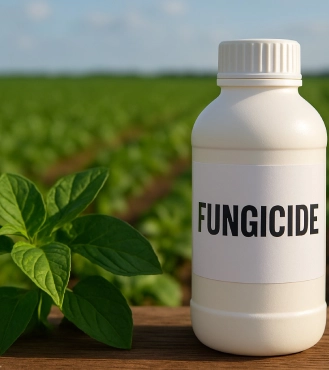
Fungicides are chemical or biological agents specifically designed to prevent, control, or eradicate fungal diseases that affect agricultural crops. These agents play a crucial role in ensuring global food security by protecting plants from pathogens that can significantly reduce yield and quality. With the growing demand for sustainable and efficient crop management, fungicides have become an indispensable component of modern agriculture.
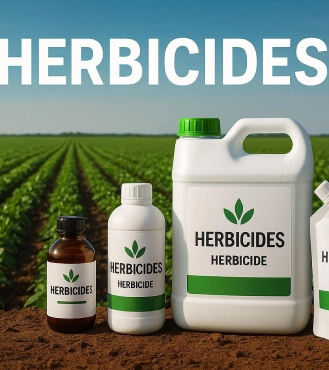
Herbicides, commonly known as weed killers, are chemical substances specifically designed to control or eliminate unwanted plants that compete with crops for sunlight, nutrients, and water. As an essential segment of modern agrochemicals, herbicides contribute significantly to increasing agricultural productivity and ensuring sustainable crop protection.
According to FAO and OECD agricultural reports (2024), herbicides account for over 45% of the global crop protection market, reflecting their critical role in maintaining food security and supporting large-scale farming efficiency.
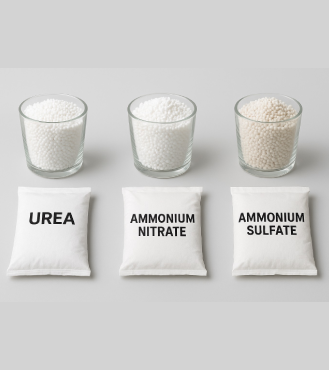
Nitrogen (N) fertilizers are the backbone of modern agriculture. They supply the single most important nutrient for crop growth—nitrogen—enabling higher yields, better protein content, and efficient plant metabolism. Among nitrogen fertilizers, urea, ammonium nitrate (AN) and ammonium sulfate (AS) are the most widely used commercial forms worldwide. This page explains chemical and physical properties, agronomic benefits, handling & safety, packaging and up-to-date market context for each product.
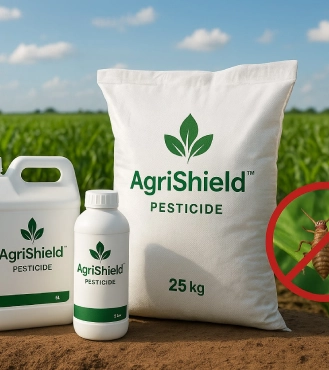
Pesticides are vital agricultural chemicals used to protect crops against pests, insects, weeds, fungi, and other organisms that threaten yield and quality. As global food demand continues to rise, the responsible use of pesticides has become an essential part of modern integrated pest management (IPM) systems. High-quality pesticide formulations not only safeguard crop productivity but also contribute to sustainable agriculture by minimizing waste and improving resource efficiency.
High-quality phosphate fertilizers for agricultural productivity, reliably sourced and globally shipped.
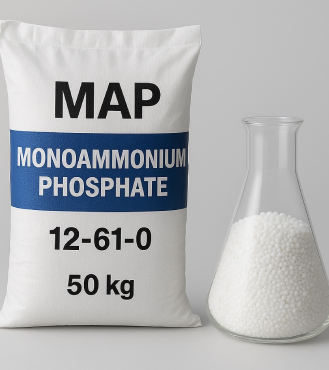
Phosphorus (P) is one of the three macronutrients essential for plant growth. It drives root development, energy transfer (ATP), flowering and grain filling. For commercial agriculture, the most widely used phosphate fertilizers are Diammonium Phosphate (DAP), Monoammonium Phosphate (MAP) and Triple Superphosphate (TSP). Each product has distinct chemistry, nutrient concentration and agronomic advantages — understanding these differences helps agronomists and buyers match fertilizer choice to crop needs, soil chemistry and logistics.
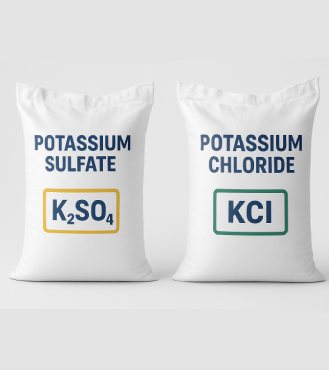
Potassium (K) is an essential macronutrient for crop health — regulating water use, enzyme activation, sugar and starch synthesis, and improving stress and disease tolerance. Potash fertilizers are the primary means to replenish soil potassium and secure high yields and crop quality. The two commercial favorites are Potassium Chloride (MOP, muriate of potash) and Potassium Sulfate (SOP, sulfate of potash). Each has distinct chemical characteristics, crop suitability and commercial handling needs — understanding those differences helps buyers, traders and agronomists choose the right product for each crop and soil.
Description:
Fertilizers & Agrochemicals
Fertilizers & Agrochemicals represent a critical product group within the global agricultural and chemical supply chain, designed to enhance soil fertility, improve crop productivity, and protect plants from pests, diseases, and weeds. This category plays a fundamental role in ensuring sustainable food production, increasing agricultural efficiency, and supporting modern farming practices worldwide.
What Are Fertilizers?
Fertilizers are chemical or mineral substances applied to soil or plants to supply essential nutrients required for healthy plant growth. These nutrients compensate for natural soil deficiencies and are vital for maximizing crop yield and quality.
Fertilizers are generally classified into the following main categories:
• Nitrogen Fertilizers
Provide nitrogen (N), essential for vegetative growth and chlorophyll formation.
Common products include:
• Urea
• Ammonium Nitrate
• Ammonium Sulfate
• Phosphate Fertilizers
Supply phosphorus (P), crucial for root development, energy transfer, and early plant growth.
Key products include:
• Diammonium Phosphate (DAP)
• Monoammonium Phosphate (MAP)
• Triple Superphosphate (TSP)
• Potash Fertilizers
Deliver potassium (K), which enhances plant resistance, water regulation, and overall crop quality.
Typical products include:
• Potassium Chloride (MOP)
• Potassium Sulfate (SOP)
• Compound & Blended Fertilizers
Formulated to provide multiple nutrients in balanced ratios, such as NPK blends, tailored to specific crops and soil conditions.
What Are Agrochemicals?
Agrochemicals are chemical products used in agriculture to protect crops, control pests and diseases, and manage weeds. They play a crucial role in safeguarding yields and ensuring crop consistency and quality.
The main categories of agrochemicals include:
• Pesticides
Used to control insects and other harmful organisms that damage crops.
• Herbicides
Designed to eliminate or suppress unwanted weeds that compete with crops for nutrients, water, and sunlight.
• Fungicides
Applied to prevent or treat fungal diseases that can significantly reduce crop yield and quality.
Importance of Fertilizers & Agrochemicals in Modern Agriculture
The Fertilizers & Agrochemicals sector supports:
• Increased agricultural productivity and food security
• Efficient nutrient management and soil optimization
• Protection of crops against biological threats
• Sustainable farming through controlled and targeted applications
With growing global demand for food and agricultural raw materials, this product group remains essential for both developing and industrialized agricultural economies.